Description
What is RAD140?
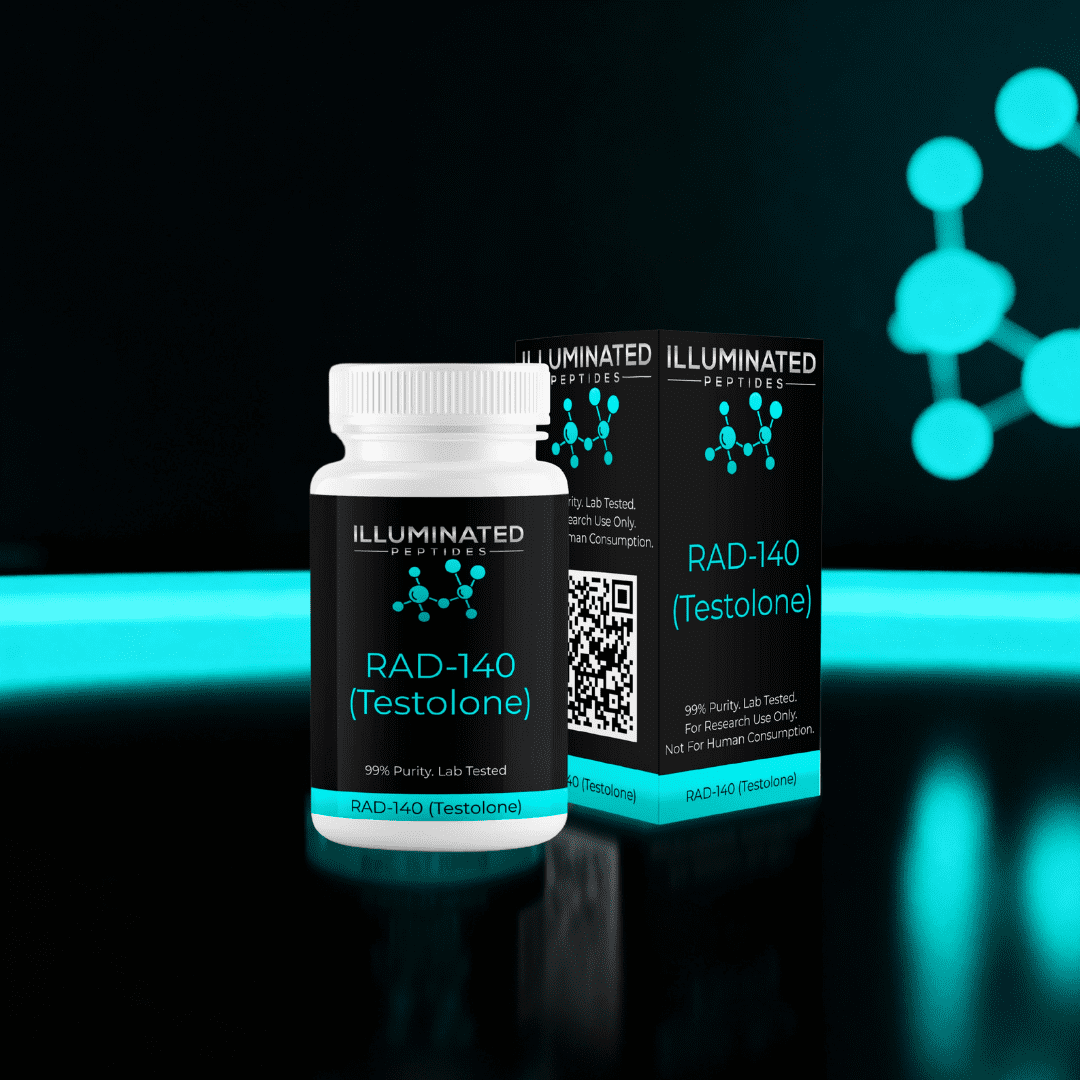
RAD140, commonly known as Testolone, is a selective androgen receptor modulator (SARM) designed to mimic the effects of anabolic steroids while reducing unwanted side effects. It binds with high affinity to androgen receptors in muscle and bone tissues, which may promote anabolic activity without the same level of impact on reproductive organs as traditional anabolic compounds.
Research into RAD140 has focused on its potential to increase lean muscle mass, improve strength, and protect bone density. Preclinical studies have also suggested possible neuroprotective effects, with RAD140 showing activity that may shield nerve cells from damage. These findings highlight RAD140 as a compound of interest in the study of muscle wasting, osteoporosis, and age-related decline, though it remains under investigation and is not approved for human use.
RAD140 Structure
IUPAC Name: 2-chloro-4-[[(1R,2S)-1-[5-(4-cyanophenyl)-1,3,4-oxadiazol-2-yl]-2-hydroxypropyl]amino]-3-methylbenzonitrile
Molecular Formula: C20H16ClN5O2
Molecular Weight: 393.83 g/mol
PubChem CID: 11608310
CAS Number: 1182367-47-0
RAD140 Research
RAD140 and Muscle Growth
RAD140 is primarily recognized for its strong anabolic activity in muscle tissue. As a selective androgen receptor modulator (SARM), it binds with high affinity to androgen receptors in skeletal muscle, stimulating protein synthesis and promoting lean muscle development. Preclinical research has shown that RAD140 can produce anabolic effects similar to testosterone, but with reduced androgenic activity in reproductive organs.
Studies suggest that this selectivity makes RAD140 a useful tool for examining pathways of muscle growth and repair. By activating anabolic signals in muscle while minimizing undesirable hormonal side effects, RAD140 provides a unique model for exploring how targeted receptor binding can be harnessed for tissue-specific outcomes.
RAD140 and Bone Health
In addition to its effects on muscle, RAD140 has been studied for its potential role in supporting bone strength and density. Androgen receptors are present in bone tissue, and activation of these receptors can stimulate bone remodeling. Research indicates that RAD140 may improve markers of bone formation while preventing excessive resorption, offering a pathway for studying skeletal health.
This property has made RAD140 an attractive subject for investigations into conditions such as osteoporosis, where bone fragility is a major concern. The dual activity on muscle and bone highlights its potential as a research tool in age-related decline studies.
RAD140 and Neuroprotection
Beyond musculoskeletal effects, RAD140 has demonstrated intriguing neuroprotective properties in laboratory models. Early findings suggest that RAD140 may shield neurons from oxidative stress and amyloid-related toxicity, processes linked to neurodegenerative conditions such as Alzheimer’s disease.
By engaging androgen receptors in neural tissues, RAD140 appears to influence signaling cascades that protect against cell death and support cognitive health. Although still in the preclinical stage, these observations make RAD140 a compound of interest for neurobiology and age-related brain research.
RAD140 and Metabolism
Research has also explored RAD140’s influence on metabolic function. SARMs like RAD140 may affect fat distribution, energy balance, and glucose handling through their interaction with androgen receptors in muscle and liver tissues. Some studies suggest improvements in metabolic efficiency and body composition, making RAD140 a candidate for deeper investigation into metabolic disorders and obesity.