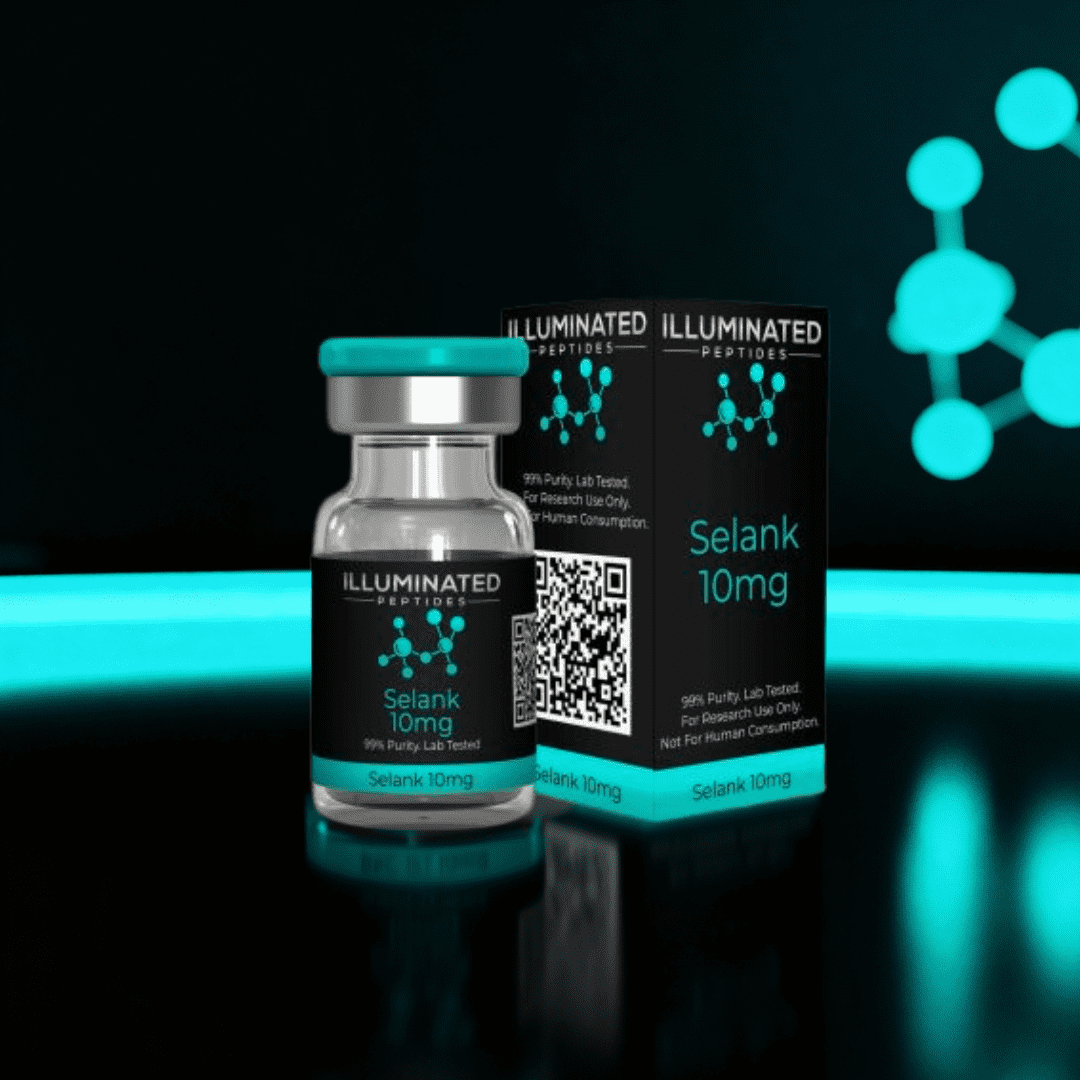
Description
What is Selank ?
Selank is a synthetic peptide developed as a derivative of the naturally occurring immunopeptide tuftsin. It functions as an anxiolytic and nootropic compound, acting primarily through modulation of the GABAergic and serotonergic systems. Research shows Selank may help regulate neurotransmitter balance, promote relaxation without sedation, and enhance cognitive performance.
In animal and human studies, Selank has been observed to reduce anxiety, improve stress resilience, and support memory formation and learning. It may also stabilize mood, improve sleep quality, and modulate immune system activity by influencing cytokine expression.
Unlike traditional anti-anxiety medications, Selank does not appear to cause dependence or significant side effects, making it a unique candidate for research into safer treatments for anxiety disorders, depression, and cognitive decline. Because it directly affects neurochemical pathways associated with both emotion and cognition, Selank 10mg is of growing interest for research in neuroscience, mental health, and age-related cognitive conditions.
Selank Research
Selank and Anxiety Regulation
Selank is most widely recognized for its ability to reduce anxiety and stabilize mood without causing sedation or dependence. Unlike traditional anxiolytic medications such as benzodiazepines, Selank works through modulation of neurotransmitter systems, particularly GABA and serotonin. It also influences the expression of brain-derived neurotrophic factor (BDNF), which plays a critical role in neural plasticity and stress adaptation.
Preclinical and clinical studies have demonstrated that Selank can reduce anxiety-like behaviors, improve emotional stability, and enhance stress resilience. By balancing inhibitory and excitatory neurotransmission, it helps maintain calmness while preserving mental clarity. This unique mechanism provides researchers with a valuable model for studying anxiety regulation independent of sedative effects.
Overall, these findings highlight Selank’s importance in neuropsychiatric research, offering insights into new approaches for understanding anxiety, stress disorders, and mood regulation.
Selank and Cognitive Function
Research has shown that Selank may enhance cognitive processes, including memory formation, learning, and attention. By modulating the expression of neuropeptides and neurotransmitters, Selank supports synaptic plasticity and communication between neurons.
Studies suggest that repeated administration of Selank can improve information retention and recall in both animal and human models. These nootropic effects have made Selank a compound of interest in research on cognitive decline, age-related memory impairment, and conditions such as ADHD.
Selank and Stress Resilience
Beyond its anxiolytic and cognitive effects, Selank has been studied for its role in stress regulation. By stabilizing neurotransmitter levels and influencing the hypothalamic-pituitary-adrenal (HPA) axis, Selank helps maintain balanced stress responses.
Animal studies indicate that Selank administration can reduce the behavioral and physiological impact of chronic stress, improving adaptive capacity. This makes it a promising research tool for investigating the biological mechanisms of resilience and coping under stress.
Selank and Immune Function
Selank is also notable for its immunomodulatory properties. It has been observed to influence cytokine expression and promote immune system balance. Research indicates that Selank may enhance the activity of natural killer (NK) cells and regulate inflammatory responses.
These effects suggest potential relevance in studying the connection between the nervous and immune systems, particularly in stress-induced immune dysregulation and inflammatory disorders.
Selank and Mood Stabilization
Some studies highlight Selank’s potential role in supporting broader emotional stability. By modulating serotonin metabolism and promoting steady neurotransmitter activity, Selank may help reduce depressive symptoms and mood swings.
Investigations continue into how chronic Selank administration might contribute to improved mental well-being, offering insights into safe and effective strategies for mood regulation.